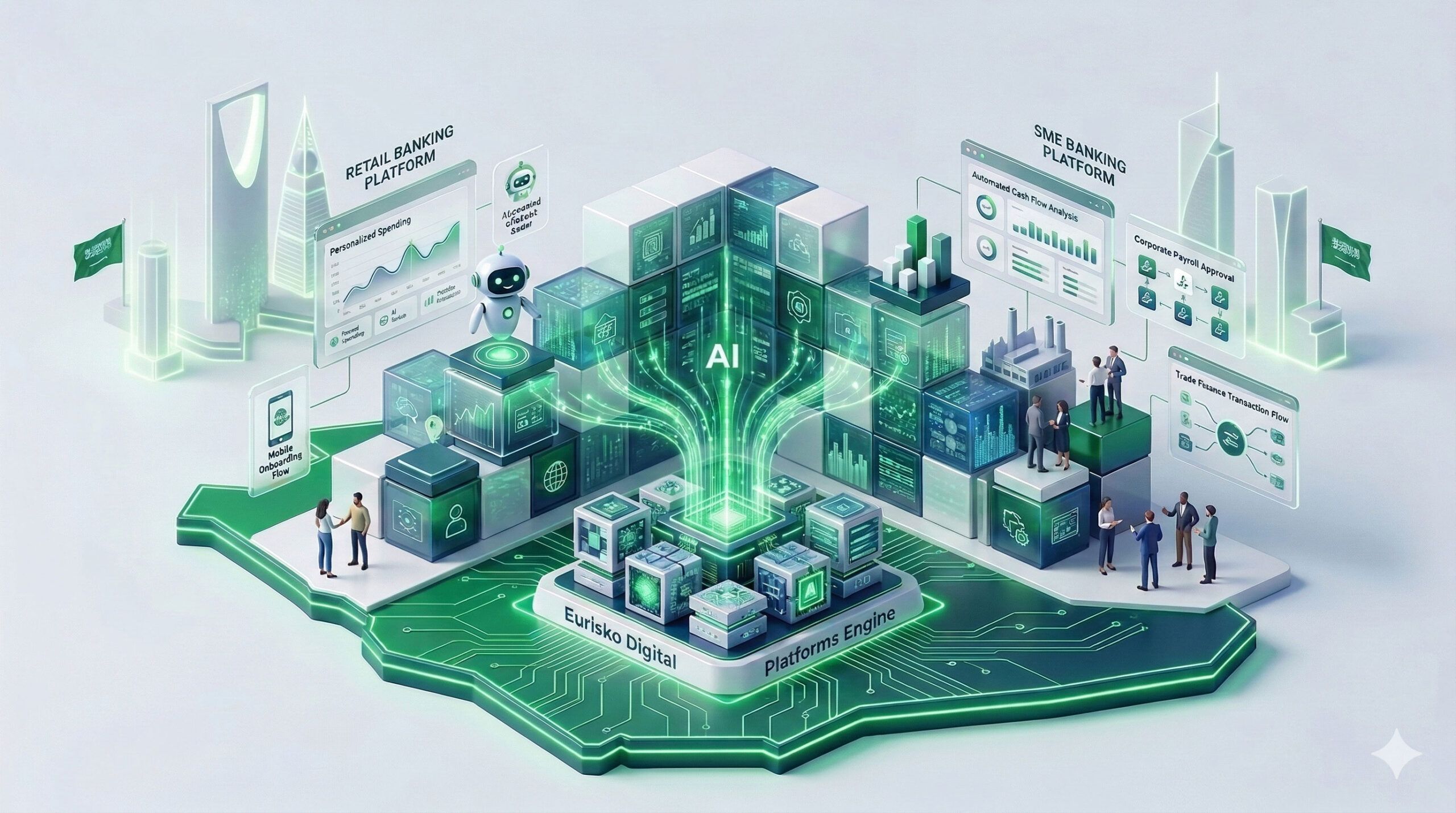
Digital transformation in Saudi Arabia is no longer a corporate buzzword; it is national policy. Vision 2030 has reframed technology as the engine of economic diversification, and organizations in Riyadh, Jeddah and across the Kingdom are rethinking how they operate, serve customers and make decisions. The pace is set from the top, and the private sector is expected to keep up.
This article looks at what is actually driving that shift, how genuine transformation differs from surface-level digitization, and what it means in practice for enterprises trying to modernize without stalling the business.

What Vision 2030 means for technology
Vision 2030 sets explicit targets for a diversified, knowledge-based economy, with a thriving private sector, world-class digital government, and reduced dependence on oil among its pillars (see Vision 2030: https://www.vision2030.gov.sa/en). Technology is the connective tissue running through nearly all of it.
For enterprises, this national direction creates both pull and pressure. Customers, regulators and partners increasingly expect digital-first service, real-time data, and the kind of responsiveness that legacy operating models struggle to deliver. Transformation becomes less a discretionary project and more a condition for staying competitive.
From digitization to genuine transformation
It helps to separate three often-confused ideas. Digitization turns paper and manual steps into digital records. Digitalization improves individual processes with technology. Transformation is bigger: it rethinks the operating model itself, so the organization can sense change, decide quickly and act across every channel.
Many programs stall because they stop at the first two. A new app or portal on top of unchanged, siloed systems looks modern but behaves the same. Real transformation reaches into the core, where the constraints actually live.
The pillars of enterprise transformation
Across sectors, effective transformation in Saudi Arabia tends to rest on the same foundations:
- Process digitization and workflow automation, to remove manual bottlenecks and speed up decisions.
- Legacy modernization, so aging core systems stop dictating what the business can and cannot do.
- Data and AI enablement, turning scattered data into insight and, increasingly, into automated action.
- Customer experience and omnichannel, so the organization presents as one coherent relationship rather than disconnected departments.
Legacy modernization is where the value hides
For established Saudi enterprises, the biggest gains and the biggest risks usually sit in the core systems. Modernizing them, through re-architecture, integration layers, or careful replacement, is what unlocks everything else: faster products, cleaner data, and the ability to add AI without brittle workarounds.
This is careful, senior engineering work rather than a cosmetic refresh, and it is best approached incrementally so the business keeps running while it changes underneath.
Data and AI enablement
Once data flows cleanly, AI moves from pilot to production. In practice that means embedding intelligence where value is created: forecasting demand, detecting anomalies, personalizing service, and automating routine decisions. The national agenda actively encourages responsible, well-governed AI adoption, which makes this a natural next step rather than a leap.
The organizations that benefit most treat data as a strategic asset first. AI amplifies good data and good process; it cannot compensate for their absence.
Where consulting fits
Because transformation touches strategy, process, data and technology at once, many enterprises benefit from a partner that can connect those threads rather than deliver a single component. The role is part strategy, part engineering: agreeing the outcome, sequencing the work, and modernizing without destabilizing operations.
A good partner meets you where you are, prioritizes the changes that pay back fastest, and transfers capability to your teams so the momentum outlasts any single engagement.
Common pitfalls to avoid
The failures tend to rhyme. Programs that chase technology for its own sake, that try to change everything at once, that ignore the people who must adopt the new way of working, or that treat security and data as afterthoughts, all tend to disappoint. The antidote is disciplined: start from a clear outcome, modernize incrementally, and build change management and security in from the beginning.
The bottom line
Vision 2030 has made digital transformation in Saudi Arabia a strategic imperative, not an IT project. Enterprises that go beyond surface digitization, modernize their core, put data and AI to work, and sequence the journey sensibly, are the ones turning national ambition into durable advantage.