
Smart Forest: IoT Sensor Networks for Early Wildfire Detection
Lebanon loses precious forest cover to wildfires every dry season, and the difference between a contained incident and a catastrophe is measured in minutes. Smart Forest is a connected environmental-monitoring platform Eurisko engineered to put live sensor data, risk models and alerting in the hands of the teams protecting those forests.
The challenge
Forests are the hardest environment you can ask electronics to survive: no grid power, patchy connectivity, extreme heat and humidity swings. Traditional monitoring meant patrols and watchtowers, human coverage that thins exactly when conditions are most dangerous.
The platform had to collect temperature, humidity and smoke signals from remote terrain, move that data over unreliable low-bandwidth links, and turn it into alerts that reach responders fast enough to matter, all on hardware cheap and rugged enough to deploy at forest scale.
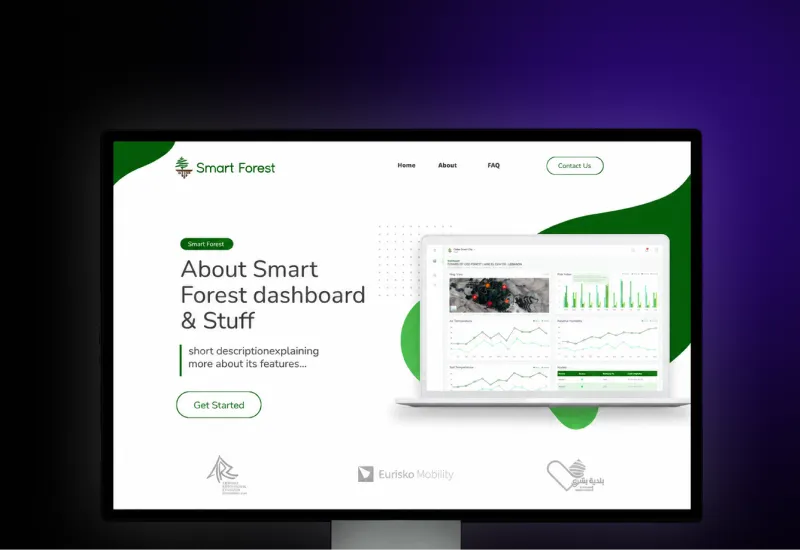
What we built
Eurisko delivered the full chain from sensor to siren: low-power environmental sensor nodes networked over long-range radio, an ingestion pipeline resilient to gaps and out-of-order data, and a real-time operations dashboard with automated risk alerts for field teams and municipalities.
Sensor network design
Low-power nodes measuring temperature, humidity and smoke, meshed over LoRaWAN for kilometre-scale coverage without grid power.
Resilient data pipeline
Ingestion built for the real world: intermittent uplinks, battery-aware duty cycles and out-of-order telemetry handled gracefully.
Risk analytics & alerting
Threshold and trend-based fire-risk scoring that escalates to SMS and app alerts the moment conditions turn dangerous.
Operations dashboard
A live map of every node (readings, battery health and alerts), designed for civil-defence and municipal operators.
Results
Smart Forest turned wildfire monitoring from periodic patrols into continuous coverage. Operators see conditions across an entire forest in one view, and risk alerts move to responders in seconds instead of relying on the first plume of smoke being spotted by eye.
Technology & services used.
IoT & Smart City Solutions in Lebanon
Connected devices, real-time dashboards and smart-city platforms.
Custom Software Development Company in Lebanon
Bespoke enterprise platforms, APIs and cloud systems built to scale.
AI Development Company in Lebanon
Generative AI, chatbots, computer vision, NLP and predictive systems.
Other platforms in production.
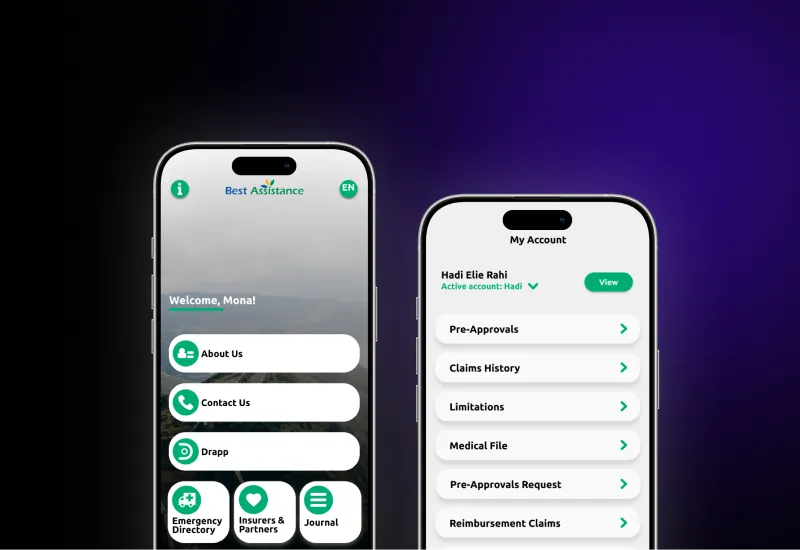
Best Assistance
Digital claims and assistance platform for the insurance sector.
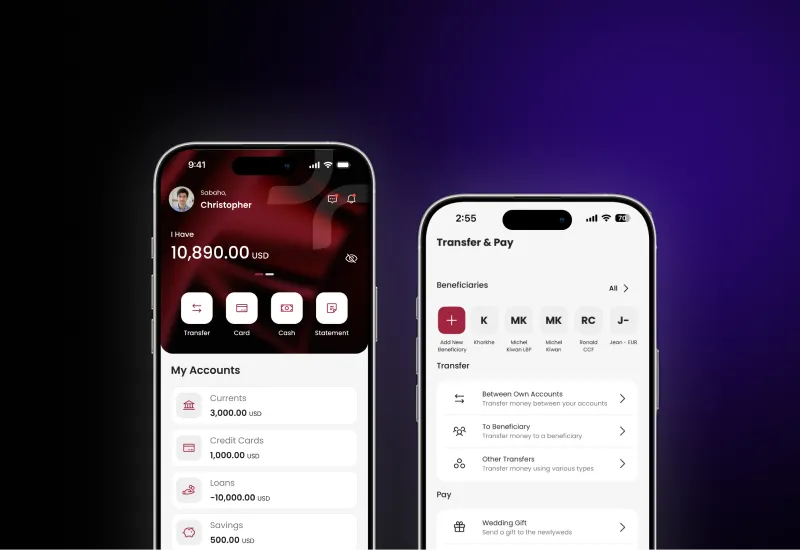
BLF Digital Banking
Banque Libano-Française (BLF)A full digital banking platform for one of Lebanon’s largest banks.
Have a similar challenge?
Tell us about your project. We’ll come back within one business day with the right team and a clear next step.
Start a project →