Digital banking in Lebanon is a different conversation from anywhere else in the region. Since 2019 the country has lived through a banking crisis, informal capital controls, a cash economy that grew to most of GDP and a generation of customers who learned to move money through wallets and transfer companies rather than banks. Yet the engineering talent that builds banking software for the Gulf sits in Beirut, and the licensed fintech sector that grew up during the crisis is now regulated and scaling.
This guide looks at where Lebanese digital finance actually stands in 2026: the payment and wallet providers now licensed under Banque du Liban’s new framework, what banks must rebuild to bring customers back, and why the lessons apply beyond Lebanon.
What the crisis did to banking behaviour
When deposits became inaccessible, customers did three things: they moved to cash, they moved to dollars, and they moved to whoever would let them pay and receive money without a bank. Transfer companies and mobile wallets filled the gap for remittances, salaries, bills and merchant payments, and became the daily financial interface for millions of residents. The banks’ mobile apps, some of which were among the best in the region before 2019, lost their purpose when the money behind them was frozen.
The result is a market where digital payment habits are strong, trust in banks is weak, and the regulator has had to build a framework for a non-bank sector that was already systemically important.
BDL’s 2026 framework for electronic payment providers
In January 2026 Banque du Liban issued Basic Decision 13790, adding a Basic Circular that regulates electronic payment and money transfer service providers for the first time as a coherent category. The circular introduces licensing, minimum capital, governance, safeguarding of customer funds, anti-money-laundering obligations and consumer protection requirements for wallets, transfer companies and payment processors, and sets out what services they may offer. Providers such as Whish Money, OMT, Purpl and others now operate under it.
For the sector this is a turning point: it converts a crisis-era workaround into a licensed industry, and it gives banks and fintechs a common rulebook to interoperate on. For an international reader it is a reminder that Lebanon’s payments sector is regulated, licensed and growing, whatever the headlines about the banks.
What banks must rebuild
Any recovery of the banking sector, whether through restructuring, recapitalisation or new entrants, will be won or lost on fresh funds: new deposits that customers can access freely. Winning those deposits means competing with the wallets on their own terms. That requires instant account opening with electronic identity verification, instant transfers and bill payments, cards that work online and abroad, transparent fees and a mobile experience at least as good as the wallet the customer already uses. It also requires something harder to engineer: visible, provable separation between fresh funds and legacy deposits.
The banks that kept their digital teams through the crisis are better placed than the market assumes. Eurisko built and still maintains channel platforms for several of them, and the underlying architecture, a digital banking platform in front of the core with onboarding, payments and cards as modules, is the same one Gulf banks are deploying now.
Interoperability between banks and wallets
The most useful near-term infrastructure is interoperability: moving money between a bank account and a wallet, or between wallets, instantly and cheaply. The new framework gives the legal basis; the technical basis is API integration between licensed providers and, eventually, a national instant payment switch of the kind every Gulf country now runs. Banks and fintechs that build API-first today, with clean consent and identity layers, will be ready when the switch arrives rather than retrofitting for it.
Why the talent stayed
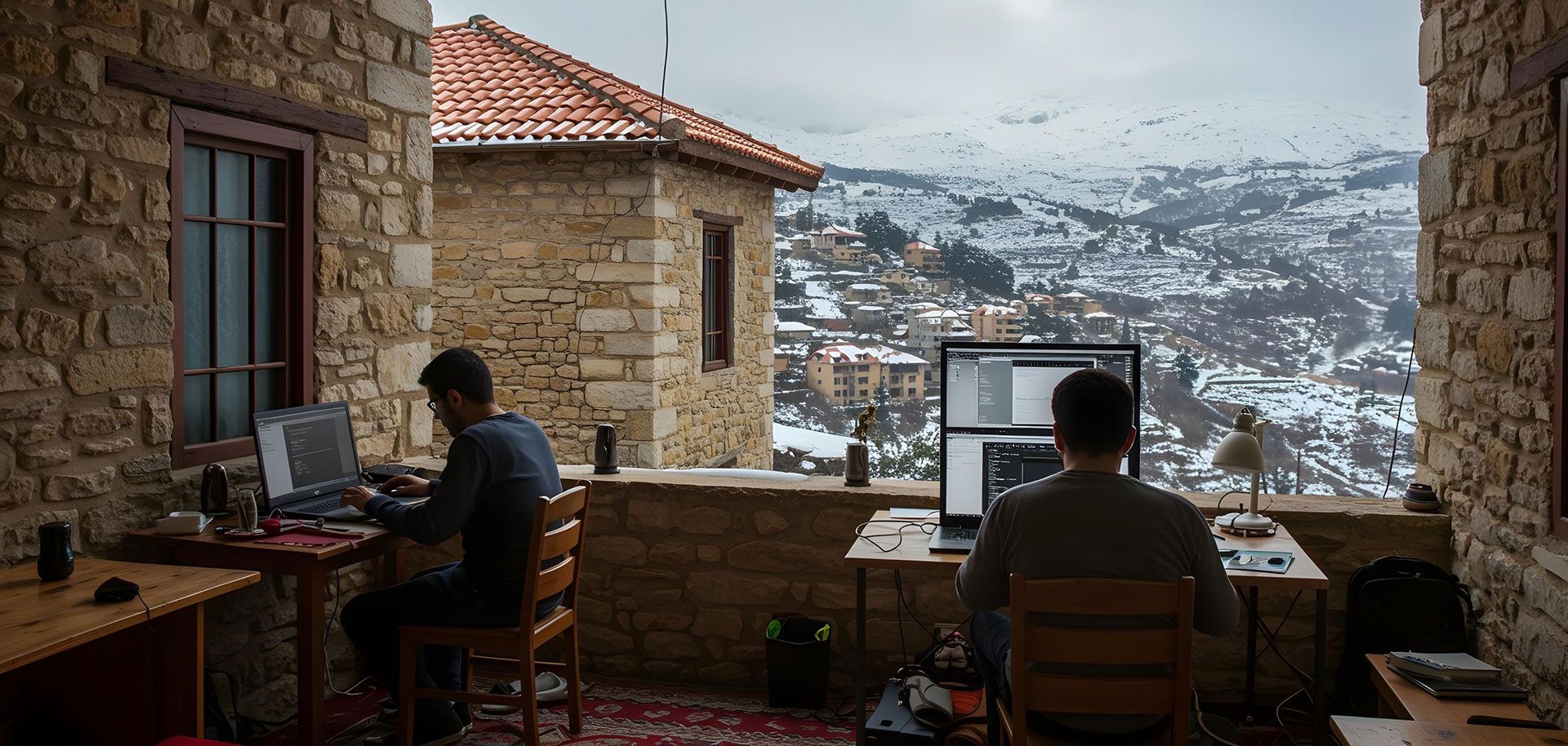
Lebanon continued to export banking software through the crisis because the engineers stayed and the demand came from abroad. Firms in Beirut build digital banking, onboarding and payments platforms for banks in Saudi Arabia, the UAE, Kuwait and Oman, often under the regulators’ most demanding requirements. That gives Lebanese banks and fintechs an unusual advantage when they rebuild: the people who built the Gulf’s channels are local.
How Eurisko helps
Eurisko has built digital banking channels in Beirut since 2009, for Lebanese banks including Banque Libano-Française, Saradar Bank and Banque BEMO, and for banks across the Gulf. If you are a Lebanese bank planning your fresh-funds proposition, a wallet provider adapting to the new BDL framework, or an international institution looking at the market, our fintech team can help you scope what to build.