
NextGen Metaverse Store for the UAE
Dubai’s retail brands compete on experience the way other markets compete on price, and the NextGen Metaverse Store is experience at its most advanced: hyper-personalized VR shopping powered by AI, social multi-user sessions and omnichannel continuity, built for UAE retail groups, malls and brands ready to define the next flagship format.
- An interactive VR store with realistic 3D products and natural hand gestures
- 360°
- Friends join the same session, turning shopping back into a social activity
- Social
- Multilingual text and voice assistants that understand what shoppers mean
- AI
- Optional payment rails beside the cards and wallets you already accept
- Web 3.0
Everything people love about stores, rebuilt in VR.
E-commerce solved convenience but lost the experience: endless grids of thumbnails, with no room for discovery, for the pleasure of browsing or for shopping with friends. The NextGen Metaverse Store brings all three back, with distinctive, personalized and entertaining experiences that build loyalty and grow the bottom line.
Shoppers enter as 3D avatars and explore an interactive 360° store, handling products as naturally as they would in a physical one, while the shelves arrange themselves around each visitor. AI assistants help in text or voice, in the shopper’s own language, around the clock.
A store to walk through, not a grid to scroll.
Each visit takes place in an interactive 360° VR store. Shoppers move through it as 3D avatars, guided by intuitive wayfinding, and find realistic 3D models of the products on its shelves.
Rich hand gestures make it physical: push a cart, grab a product, turn it to see every side and return it to the shelf, just as in a real aisle. Exploration like this holds attention far longer than a few seconds on a thumbnail grid.
- 3D avatars in an interactive 360° VR store
- Realistic 3D product models
- Intuitive wayfinding from aisle to aisle
- Push carts, grab, rotate and return items by hand
Every shopper walks into a different store.
The store assembles itself for each visit: aisles, shelves and featured products are arranged from the shopper’s purchase history, behavioural patterns mined by market-basket analysis and recommendations from similar shoppers.
Loyalty programs and CRM segments feed the same personalization engine, and multi-profile support extends it to the whole family. Attention captured during the visit refines this session and the next.
- Aisles and shelves arranged from purchase history
- Market-basket analysis of behavioural patterns
- Peer recommendations from similar shoppers
- Multi-profile support for the whole family
Start in a headset, finish on any device.
The session travels with the shopper: begin in a VR headset at home, resume on mobile in a queue and complete the order on the web at a desk, picking up exactly where the journey paused.
Headsets deliver full immersion, but the same store runs on TV, web and mobile, so no customer is excluded. Friends can be invited in along the way, and the AI assistant follows the shopper throughout.
- One store on VR headsets, TV, web and mobile
- Resume mid-session on any device
- No headset needed to shop
- Friends invited into the journey
See what shoppers examined, from where and for how long.
Spatio-temporal raycasting tracking reads attention in 3D: which products shoppers examined or skipped, from which position and for how long. It is behavioural insight that flat analytics cannot see.
Real-time consumer data then optimizes shopping spaces, item prices and the overall experience. The same behavioural data exports to your warehouse, enriching the customer picture every other channel uses.
- Attention tracked in space and time
- Products examined or skipped, and for how long
- Spaces and item prices optimized in real time
- Behavioural data exported to your warehouse
Checkout on your existing rails, with Web 3.0 as an option.
Checkout closes the loop through the payment gateways you already operate, cards and wallets included, so the immersive store needs no new payment stack.
Web 3.0 payment rails are available wherever a retailer’s strategy calls for them, never as a dependency. Every order flows into the same fulfilment pipeline as your web store.
- Payments through your existing gateways
- Card and wallet payments built in
- Optional Web 3.0 payment rails
- Orders into your existing fulfilment pipeline
An assistant in every aisle, in the shopper’s language.
AI shapes the store around each shopper, answers questions in text or voice in their own language, and turns behaviour into insight the retailer can act on.
- Personalization
A store arranged per shopper
Aisles, shelves and featured products assembled from purchase history, market-basket analysis and peer recommendations.
- Assistance
Multilingual, in text or voice
Text and voice assistants that understand customer intent, respond with human-like ease and serve shoppers around the clock.
- Insight
Attention, measured in 3D
Spatio-temporal raycasting and real-time consumer data reveal what shoppers examined, then optimize spaces and prices.
Speaks the shopper’s language
Shoppers type or talk in their own language, and the assistant answers in kind, by text or voice.
Understands intent
It works out what a shopper is looking for, not just the words they use, and responds with human-like ease.
Personal for the whole family
Multi-profile support extends personalization to every member of the household, each with their own preferences.
Behaviour that feeds the store
Attention and basket patterns refine this session and the next, then flow to your warehouse for every other channel.
For retailers and brands ready to sell beyond the screen.
One immersive commerce platform, four ways to put it to work.
Retail groups & malls
Extend physical retail into shared virtual stores, with social, multi-user shopping.
Brand experiences
Launch products inside immersive branded spaces that advertising cannot match.
Omnichannel commerce
Add an immersive channel on top of the e-commerce catalogue and payments you already run.
Flagship digital events
Open seasonal or launch-event stores where audiences shop together and share the experience.
Built on your commerce stack, not beside it.
The immersive store is a new channel on the systems you already run, not a parallel operation.
- VR headsets
- Web, mobile & TV
- Catalogue APIs
- Payment gateways
- Cards & wallets
- Web 3.0 (optional)
- Loyalty & CRM
- Data warehouse
Catalogue, inventory and pricing
Your existing product catalogue, inventory and pricing come in through APIs and feed the 3D product models on every shelf.
Payments and fulfilment
Payments run through the gateways you already operate (cards, wallets and optional Web 3.0), and orders join the same fulfilment pipeline as your web store.
Loyalty and CRM
Loyalty programs and CRM segments plug into the personalization engine, so the immersive channel deepens relationships you already own.
Analytics that flow back
Immersive behavioural data exports to your data warehouse, enriching the customer picture every other channel uses.
Frequently asked questions.
Do customers need a VR headset to shop?
No, the experience is omnichannel by design. Headsets deliver full immersion, but the same store runs on web, mobile and TV, and a journey can move between them mid-session. Launching on every form factor means no customer is excluded.
How does the store connect to our existing e-commerce operation?
Through APIs to your catalogue, inventory, pricing and payment gateways: the immersive store is a new channel on your existing commerce stack, not a parallel operation. Orders flow into the same fulfilment pipeline, and loyalty and CRM data power the personalization.
What does personalization actually change in the store?
The layout itself: aisles, shelves and featured products are assembled per shopper from purchase history, behavioural analysis and peer recommendations. Two customers walk into visibly different stores, each arranged around what they are most likely to want.
Is Web 3.0 payment support required?
No, it is an option, not a dependency. The platform processes traditional card and wallet payments through your existing gateways, with Web 3.0 payment rails available where a retailer’s strategy calls for them.
What can the AI assistant do for shoppers?
It serves shoppers in multilingual text or voice, around the clock, understanding what they mean and responding with human-like ease. It follows the session across devices, so help is at hand whether the journey continues in a headset, on mobile or on the web.
Read this page for your market.
Explore the product line.
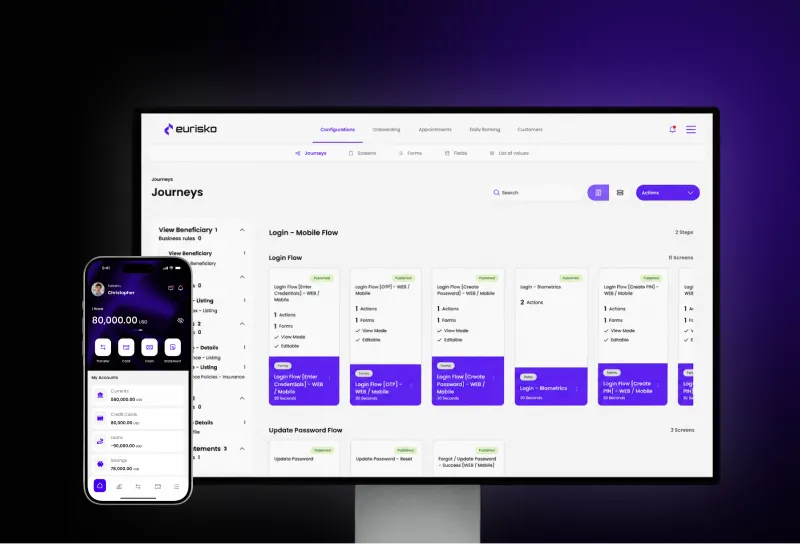
Eurisko DXP: Digital Banking Platform for the UAE
The digital banking platform for modern banks: mobile and web banking, no-code journeys and on-premise AI.
OTT Platform for the UAE
Streaming and video delivery for media & entertainment.
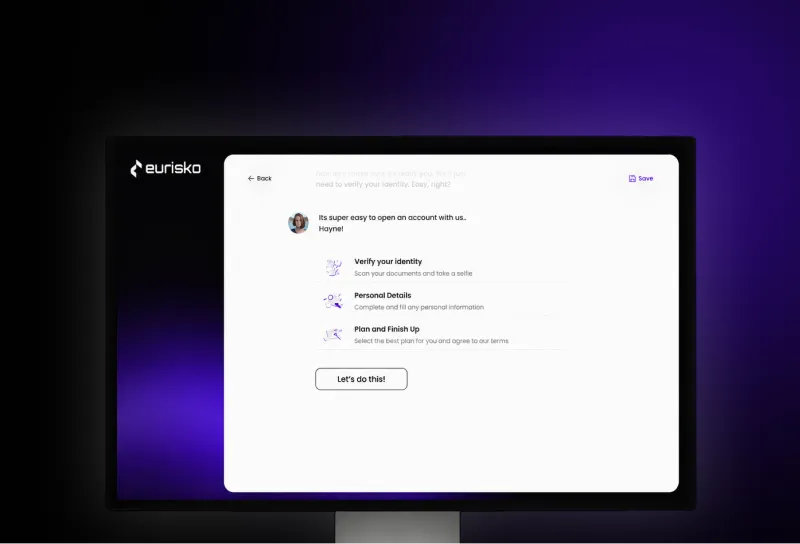
Digital Onboarding System for the UAE
KYC-ready onboarding for banks and financial services.
Want a walkthrough?
Tell us about your use case and we’ll set up a demo tailored to your market, your compliance envelope and your stack.
Request a demo →
Friends shop together again, in the same session.
Friends join the same session as 3D avatars, explore the aisles together and share the experience, turning shopping back into the social activity it always was.
Retail groups and malls extend physical retail into shared, multi-user virtual stores, while seasonal and launch-event stores let whole audiences shop together.
Shopping together, from one invitation